

How Underground Utilities Are Installed on a Commercial Site in Georgia
Underground utilities construction on a commercial site happens after mass grading and before anything is built on top. Get the sequence or the depths wrong and the cost shows up later as a cut slab, a re-dug trench or a failed inspection.
The short answer: underground utilities construction on a commercial site happens after mass grading and before curb and paving, in five steps:
- Locate existing lines through Georgia 811 and private utility locating.
- Install storm drainage, sanitary sewer, domestic water and fire lines, deepest system first.
- Protect every trench 5 feet or deeper with a trench box or shoring.
- Test and inspect each system before backfill.
- Backfill in compacted, density-tested lifts so the pavement above does not settle.
Carmichael Development has installed underground utilities on commercial, industrial and multifamily sites across metro Atlanta and Georgia since 2000. This post walks through how underground utilities construction actually happens on a site: where it fits in the schedule, which systems go in first, what Georgia ground does to the plan, how the work is tested, and what the numbers look like on real projects.
If you are a general contractor or developer scoping a project, this is what to expect from the utility phase. For details on our underground utilities services, see the service page.
Where Underground Utilities Construction Fits in the Sitework Sequence
Underground utilities are the fourth step in a typical sitework package. They cannot start until the site is close to subgrade, and they have to be finished and inspected before curb, paving or building pads go in.
- Erosion and sediment control. Silt fence, construction exits and inlet protection go in before crews disturb any ground. Georgia requires this under the site’s NPDES construction stormwater permit.
- Clearing and grubbing. Trees, stumps and topsoil come off. Crews stockpile topsoil for later.
- Mass grading. Cut and fill brings the site to subgrade. On a large site this is the longest phase. At RaceTrac Kingston our crews moved roughly 180,000 cubic yards across 30 acres before utility work could start.
- Underground utilities. Storm, sanitary, water and fire lines go in from the deepest to the shallowest.
- Final grade and hardscape. Curb, base, paving and building pads follow once the utilities pass inspection and crews backfill the trenches.
Why utilities wait for grading: the engineer sets trench depth from finished grade. If the pipe goes in before the site is at subgrade, the crew is either digging through uncompacted fill or guessing at cover depth. On most sites the crew starts utilities as soon as a section reaches subgrade, while grading continues elsewhere, so the two phases overlap rather than run back to back.
Before the First Trench: Locating Existing Underground Utilities
The utility phase starts before any digging, by finding what is already in the ground. On a development site that can include old water services, abandoned sewer, gas, power or fiber lines that are not on the plans.
- Georgia 811 locate request. State law requires a locate request before excavation. Member utilities mark their lines, and the marks are refreshed for as long as digging continues. Contractors file requests through Georgia 811.
- Private utility locating with ground-penetrating radar (GPR). 811 only marks lines owned by member utilities. A private locator maps the rest, such as old site services, using GPR and electromagnetic locating.
- Conflict resolution. Our team then checks the located lines against the new utility plan. Where they conflict, we relocate the existing line with its owner or work with the engineer to adjust the design before the crew reaches that spot.
Good existing-conditions data starts with the survey. Our post on surveying and mapping in sitework covers how topographic and utility surveys feed the plan.
The Four Underground Utilities and the Order They Go In
A commercial site usually carries four underground systems. Crews install them deepest first because otherwise a shallow line laid early would have to come out again when the deeper trench is dug.
| Order | System | What it is | Why it goes in this position |
|---|---|---|---|
| 1 | Storm drainage | Inlets, catch basins, junction boxes, detention pond outlet structures and the pipe between them | Gravity-fed and usually the deepest and largest pipe on site. Often starts while grading is still finishing. |
| 2 | Sanitary sewer | Gravity main, manholes and service laterals to each building | Gravity-fed, so depth is fixed by the tie-in point. Crews set it before shallower pressure lines cross it. |
| 3 | Domestic water | Pressure main, valves, hydrants, meters and services | Pressurized, so it can bend around obstacles and sits shallower. Needs minimum separation from sewer. |
| 4 | Fire line | Dedicated pressurized main to the building’s fire service | Goes in with or just after domestic water. Inspectors check backflow and valve assemblies separately. |
The utility companies or their contractors install dry utilities such as power, gas, telecom and fiber. The sitework contractor’s job is to leave the corridor and crossings ready for them.
Storm drainage in practice
Storm is the system that shapes the site. The civil engineer designs detention ponds, pipe sizes and inlet locations to meet the county’s stormwater ordinance, and in Georgia nearly every county has one. On the Miller Zell expansion in Atlanta, our crews installed storm drainage first, as soon as mass grading was close, with about 1,332 linear feet of storm pipe going in ahead of the water and sanitary lines.

Sanitary and water in practice
Crews lay sanitary sewer to a tight grade. A gravity line that is a few inches off at the invert can hold water or back up, so the crew checks grade on every run as it goes in. Similarly, the county will not accept a water line until it passes a pressure test and chlorination. On a large site both systems run in the thousands of feet: the Douglasville distribution site carries roughly 10,000 linear feet of underground utilities across two buildings.
How the Pipe Goes In: Trenching, Bedding and Trenchless Crossings
Once a section is at subgrade and the lines are located, the crew trenches, lays pipe to line and grade, and closes up behind itself.
- Trench protection. OSHA’s excavation standard requires a protective system for trenches 5 feet deep or more. Crews use trench boxes or steel sheet piling depending on depth and soil.
- Bedding and joints. Pipe sits on compacted bedding stone so it does not shift. Crews seal every joint, set thrust blocks at bends and tees on pressure lines, and cap conduit ends to keep water out.
- Materials to spec. Pipe, structures and fittings follow the engineer’s specifications and the local authority’s standards for pressure rating, corrosion resistance and service life.
- Trenchless crossings. Where a line has to cross under an existing road, a creek or a sensitive area, horizontal directional drilling (HDD) or boring installs it without an open cut.
Working through Georgia ground conditions
Georgia dirt changes fast, sometimes within the same site. The three conditions that affect utility work most are groundwater, red clay and rock.
Groundwater. Trenches in low areas and near creeks fill with water. The crew dewaters with pumps or well points and places bedding stone under the pipe to keep it stable. At RaceTrac Kingston, groundwater added a full layer of planning to the mass grading and utility phases, and dry, workable fill material became essential to keep the schedule.
Red clay. Piedmont clay holds water, pumps under load and is hard to compact when wet. As a result, crews have to compact and test trench backfill in lifts, or the pavement above it settles. Wet weather can stop trench backfill for days.
Rock. North Georgia sites often hit rock within trench depth. Rock trenching slows the crew and sometimes means changing the pipe alignment or the invert. Good pre-construction planning, including geotechnical borings along the utility runs, keeps rock from becoming a surprise.
The practical rule: the engineer designs the utility plan, but the superintendent decides the sequence and means in the field based on what the ground is doing that week.
Technology That Keeps Utilities on Line and on Grade
Gravity lines only work if they are built to the designed invert, so accuracy matters more in utility work than almost anywhere else on a site.
- Machine control. Carmichael runs Leica machine control, with site models built in AGTEK, so excavators dig to the designed cut and invert instead of working from stakes alone. GPS/GNSS setup and calibration is supported in-house across North Georgia and metro Atlanta job sites.
- Drone surveys. Drone flights processed in Propeller produce survey-grade topographic data. The team uses it to track earthwork quantities and check progress against the plan.
- Field verification. The crew checks inverts and grades as pipe goes in, not after the trench is closed.
How Underground Utilities Construction Is Tested Before Cover-Up
Carmichael’s crews test every system before the trench is closed because the cost of fixing a line goes up roughly tenfold once there is pavement over it. The county or municipal utility authority inspects each system before accepting it.
| System | Typical tests | Who inspects |
|---|---|---|
| Storm drainage | Visual and camera inspection of joints, grade check on inverts, structure inspection | County stormwater or engineering department |
| Sanitary sewer | Low-pressure air test or vacuum test on each run, mandrel (deflection) test on flexible pipe, manhole vacuum test, camera inspection | County or city water and sewer authority |
| Domestic water | Hydrostatic pressure test, flushing, chlorination and bacteriological sampling | Water authority, then Georgia EPD approval for service |
| Fire line | Hydrostatic test, flush, backflow preventer certification | Fire marshal and water authority |
Two other things happen before cover-up. First, surveyors record utility locations for the as-built drawings, which the owner and the utility authority keep on file. Second, the geotechnical engineer density-tests the trench backfill as crews compact it in lifts, so the pavement above it does not settle.
After testing, crews close the trench. They compact backfill in lifts, haul off excess soil or reuse it on another project, and use recycled material where the specification allows. Finally, they bring the surface back to final grade or prepare it for curb and paving.
Skipping or rushing any of this is how a site ends up with a settled driveway or a rejected sewer connection months after the contractor has left.
What it looks like on a real site
Three current Carmichael Development projects show the scale of underground utilities construction on commercial and industrial sites in Georgia.
| Project | Site | Earthwork | Underground utilities | GC / owner |
|---|---|---|---|---|
| Miller Zell expansion, Atlanta | 130,700 SF industrial warehouse on 7.16 acres | ~14,000 CY moved | ~3,600 LF of pipe: storm drainage, water and sanitary sewer | The Conlan Company |
| Douglasville distribution site | Two distribution buildings, 325,000+ SF | ~90,000 CY | ~10,000 LF of underground utilities | Integra Construction |
| RaceTrac Kingston | 30+ acre gas station and convenience store site | ~180,000 CY | ~3,400 LF of pipe plus water and sewer utilities and a deceleration lane | RaceTrac Construction |
On each of these, Carmichael self-performs the full sitework package: erosion control, clearing and grubbing, mass grading, stormwater management and underground utilities. One contractor across every phase means the grading crew and the pipe crew are on the same schedule and the same radio.
More examples are in the project gallery.
How GCs and developers keep the utility phase on schedule
Most utility delays are not caused by the pipe. They come from paperwork, plan changes and coordination with other trades. Five things that keep the phase moving:
- Have the utility permits and tap approvals in hand before grading finishes. Water and sewer connection approvals from the county can take weeks. If they arrive after the site is at subgrade, the crew waits.
- Lock the building pad and finished floor elevations early. Sewer invert depth, storm pipe sizing and water meter locations all key off the finished floor. A late change to the pad means re-engineering the gravity lines.
- Get a geotechnical report that covers the utility runs, not just the building footprint. Rock and groundwater along a sewer alignment are cheaper to find in a boring than in a trench.
- Coordinate dry utility crossings before wet utilities go in. Power, gas and telecom conduits often cross storm and sewer lines. Sleeves are set during utility work so those trades do not have to cut pavement later.
- Expect plan revisions and plan the communication for them. On the White, Georgia warehouse site, plan revisions and permitting requirements came mid-project. Close coordination with The Conlan Company kept grading and utility installation moving through them.
A sitework contractor who runs both grading and utilities can absorb most of these without a schedule hit, because the same superintendent is sequencing both crews.
Underground Utilities Construction FAQs
Planning and Scheduling Underground Utilities
It depends on the length of pipe, the depth and the ground. As a rough guide, a crew installs a few hundred feet of storm or sewer pipe a day in good conditions. A site with 3,000 to 4,000 linear feet of utilities typically takes several weeks, and the phase usually overlaps with the end of mass grading. Rock, groundwater and inspection scheduling are the main variables.
Start with a Georgia 811 locate request, which marks lines owned by member utilities. Because 811 does not cover private lines on the property, a private locator maps them with ground-penetrating radar. Then the contractor checks the results against the new utility plan and resolves conflicts before trenching.
Trenchless methods such as horizontal directional drilling (HDD) and boring install pipe or conduit under a road, creek or existing structure without an open trench. Contractors use them for crossings where an open cut would disrupt traffic, damage pavement or disturb a sensitive area.
Scope and inspections
Wet utilities carry water: storm drainage, sanitary sewer, domestic water and fire lines. The sitework contractor installs them. Dry utilities are power, gas, telecom and fiber. The utility companies or their contractors usually install them in conduit the sitework contractor has prepared.
Often, and it is the simpler arrangement. Carmichael Development self-performs erosion control, clearing, mass grading, stormwater management and underground utilities as one package, so one superintendent sequences all of it.
The county or city water and sewer authority inspects sanitary and water lines, the county engineering or stormwater department inspects storm drainage, and the fire marshal inspects fire lines. Georgia EPD also reviews water system approvals and the site’s erosion control permit.
Carmichael Development is based in Woodstock, Georgia, and installs underground utilities across metro Atlanta and North Georgia, with projects throughout the state. Andy Carmichael founded the company in 2000, and it now has a team of more than 210 employees.
Ready to scope the utility phase on your project?
Carmichael Development handles underground utilities construction, including storm drainage, sanitary sewer, water and fire lines, on commercial, industrial and multifamily sites across metro Atlanta. Send us the civil set and we will walk the sequence, the ground and the schedule with you. Contact us or learn more about our underground utilities services.
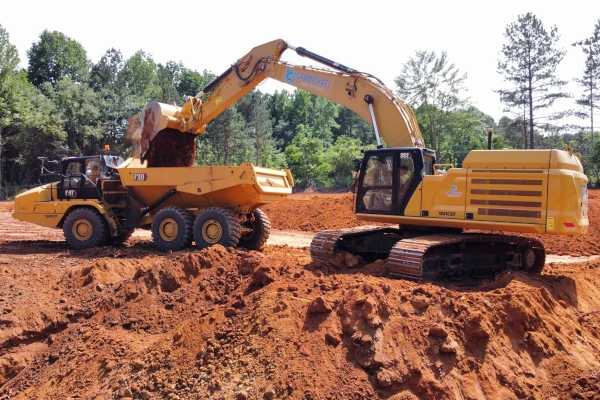
Innovative Solutions
Experience the future of excavation and sitework with Carmichael Development's cutting-edge solutions in Atlanta, Georgia.
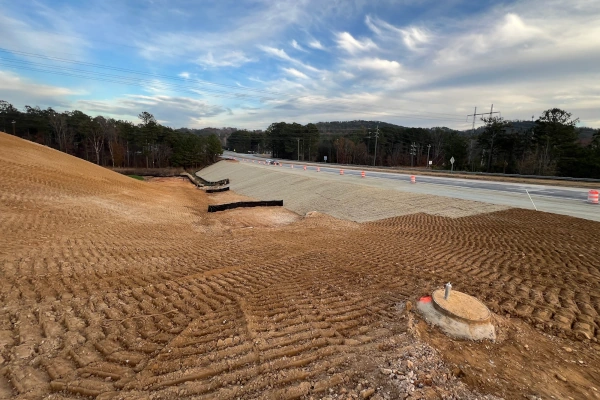
Proven Expertise
Trust our team's expertise to transform your landscape – Partner with us for unmatched excavation and sitework excellence.
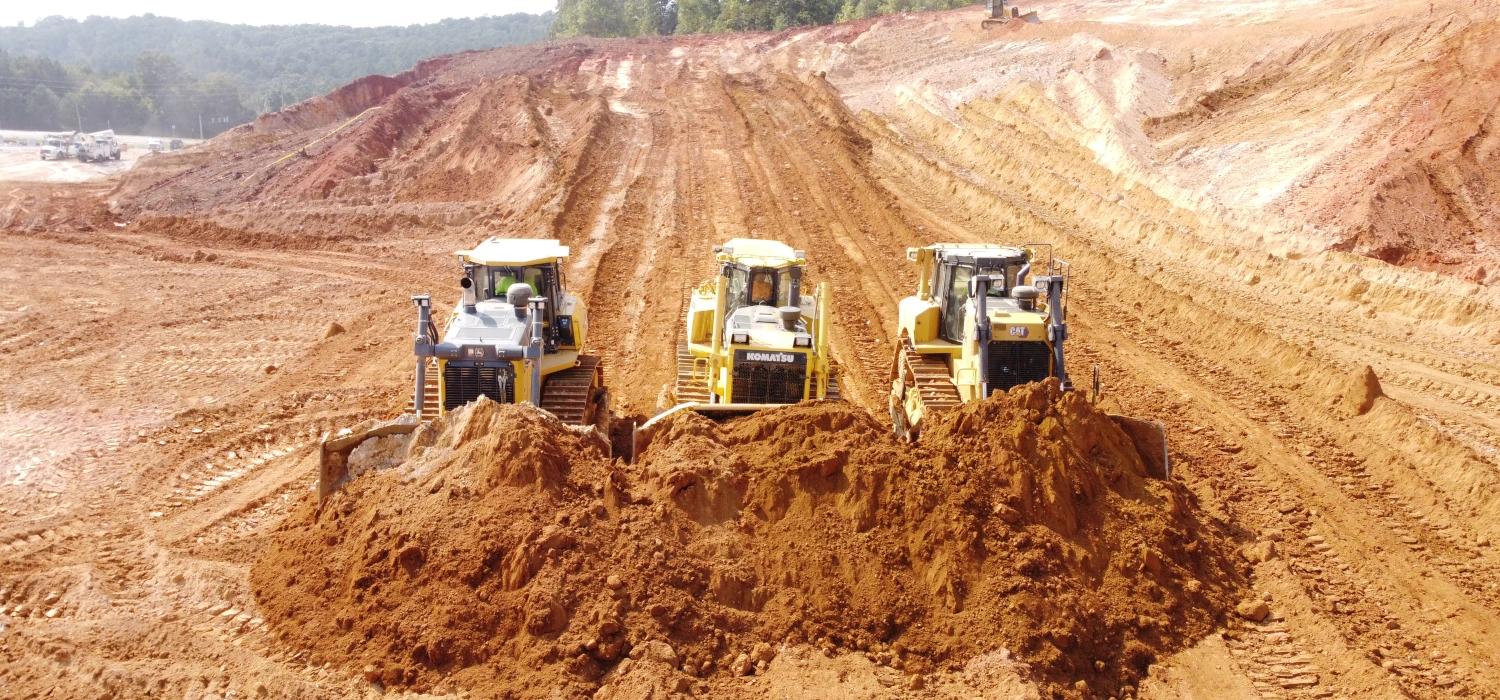
Why Choose Us?
Carmichael Development brings the experience, precision, and dedication necessary to build your vision from the ground up.

How to Choose an Excavation and Site Utility Contractor in Georgia
What to check before choosing an excavation and site utility contractor in Georgia: licensing, erosion control, 811, testing and the questions to ask.
Read More
Why Safety Is the Foundation of Every Jobsite at Carmichael Development
At Carmichael Development, safety is not just a requirement—it is the foundation on which every project is built.…
Read More